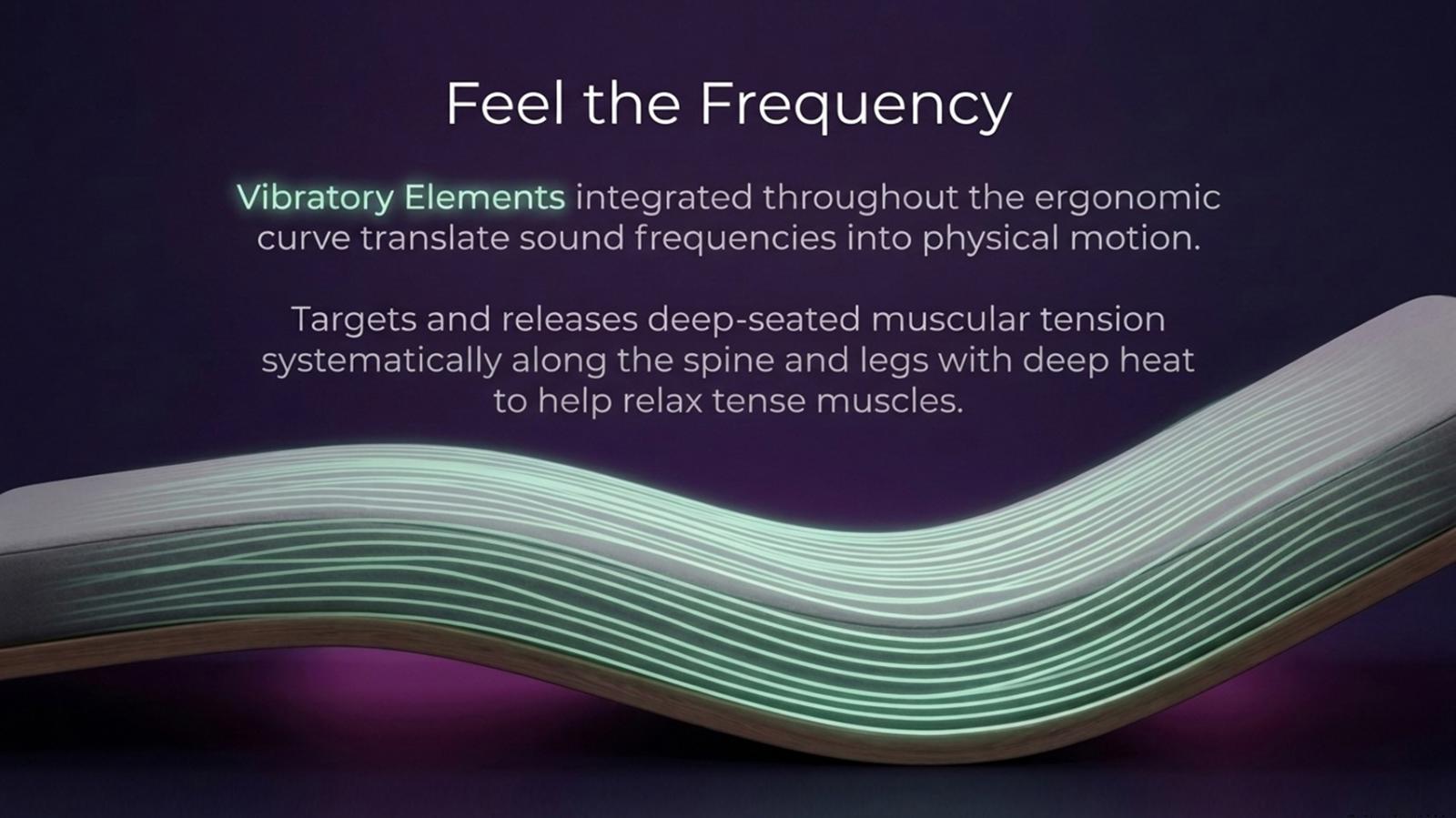
Vibroacoustic Therapy (VAT) is a non-invasive wellness therapy that uses low-frequency sound vibrations and music to help calm the nervous system, relax the body, and promote overall well-being. During a session, a person lies comfortably on a specialized lounger or therapy bed equipped with embedded speakers and vibratory elements that send therapeutic frequencies directly through the body.
Unlike simply listening to music, Vibroacoustic Therapy allows the body to physically feel sound vibrations. These low gamma frequencies — typically between 20hz and 86hz — are carefully selected to help encourage relaxation, improve circulation, ease physical tension, support better sleep, and help calm the body’s stress response.
The therapy works by helping the nervous system shift from a “fight or flight” state into a more restorative parasympathetic state, often referred to as “rest and repair.” This calming response is connected to stimulation of the vagus nerve, which plays a major role in regulating stress, relaxation, breathing, heart rate, and overall nervous system balance.
During a typical session, soothing music and low-frequency vibrations work together to create a deeply immersive experience. Many people describe the sensation as a gentle internal massage or a calming wave moving through the body. Sessions are commonly around 25 minutes, although longer sessions may benefit individuals dealing with more chronic symptoms or deeper nervous system dysregulation.
As a Certified Vibroacoustic Therapy Practitioner, I am trained to use therapeutic low gamma frequencies in ways that may help ease symptoms associated with chronic pain, tremors, stress overload, poor sleep, muscle tension, and circulation concerns. While Vibroacoustic Therapy is not intended to diagnose, treat, or cure disease, many individuals living with chronic conditions and autoimmune-related symptoms are exploring VAT as a supportive wellness modality to help improve comfort and quality of life.
One of the reasons Vibroacoustic Therapy is gaining attention is because many people today live in a constant state of stress and overstimulation. VAT provides an opportunity for the body to slow down, reset, and experience deep relaxation in a way that traditional rest often does not achieve.
For many clients, the goal is simple: helping the body finally relax enough to begin restoring balance.