The short answer is: No — but they are related.
Both use sound and frequency to influence relaxation, mood, and the nervous system. However, binaural beats work primarily through the ears and brain, while Vibroacoustic Therapy (VAT) works through both the auditory system and the physical body using low-frequency vibration you can actually feel.
That distinction is what makes the experiences very different.
What Are Binaural Beats?
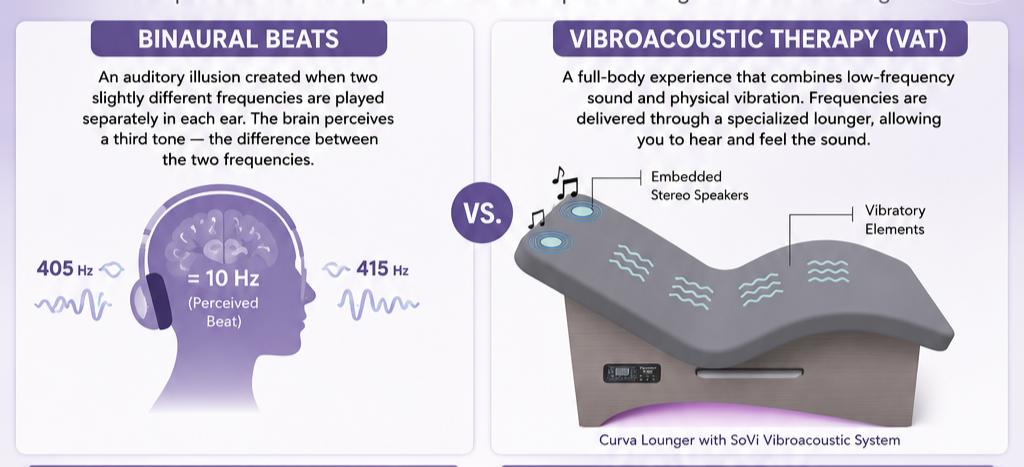
Binaural beats are an auditory illusion created when two slightly different sound frequencies are played separately into each ear through headphones.
For example:
- Left ear hears 405 Hz
- Right ear hears 415 Hz
The brain interprets the difference between those tones and perceives a third frequency — in this case, 10 Hz.
This perceived frequency is called a binaural beat.
The idea behind binaural beats is based on brainwave entrainment, meaning the brain may begin synchronizing its electrical activity to the perceived frequency.
Different frequencies are associated with different mental states:
- Delta (0.5–4 Hz): Deep sleep and recovery
- Theta (4–8 Hz): Meditation, creativity, relaxation
- Alpha (8–14 Hz): Calm focus and stress reduction
- Beta (14–30 Hz): Alertness and concentration
Because of this, binaural beats are often used for:
- Relaxation
- Sleep support
- Meditation
- Focus and productivity
- Stress reduction
Most people use binaural beats through apps, YouTube tracks, or meditation playlists while wearing headphones.
What Is Vibroacoustic Therapy (VAT)?
Vibroacoustic Therapy is much more immersive and physical than binaural beats.
VAT uses low-frequency sound waves — typically between 20 Hz and 86 Hz — delivered through transducers embedded in a chair, lounger, mat, or table.
Instead of only hearing sound, the body physically feels the vibration moving through muscles, tissues, and the nervous system.
In many sessions, therapeutic frequencies are paired with calming music and guided protocols designed to promote relaxation and nervous system regulation.
Unlike binaural beats, which rely mainly on auditory perception, VAT combines:
- Audible sound
- Physical vibration
- Nervous system stimulation
- Somatic relaxation
The result is often described as a full-body experience rather than simply listening to audio.
The Biggest Difference
The easiest way to understand the difference is this:
Binaural Beats:
The brain hears the frequency.
Vibroacoustic Therapy:
The body feels the frequency.
Binaural beats are primarily a listening experience.
VAT is a multisensory experience involving both hearing and mechanical vibration.
How They Affect the Nervous System
Both modalities aim to help the body shift away from chronic stress and into a calmer state.
Binaural beats attempt to influence brainwave activity through auditory stimulation and entrainment.
VAT works differently because the low-frequency vibration physically stimulates the body and may help activate the parasympathetic nervous system — the “rest and repair” mode associated with calming the body out of fight-or-flight stress responses.
Many people report that VAT feels grounding because the vibration can help release physical tension while calming mental overstimulation at the same time.
Why Vibroacoustic Therapy Feels More Intense
One reason VAT tends to feel more powerful for some individuals is because vibration is being transmitted directly through the body.
Low frequencies can often be felt in areas where people commonly carry tension:
- Back
- Shoulders
- Legs
- Chest
- Neck
This tactile component creates a body-based sensory experience that binaural beats alone cannot provide.
In Vibroacoustic Therapy sessions, the frequencies are often carefully selected by a trained practitioner to support goals such as:
- Relaxation
- Better sleep
- Nervous system regulation
- Circulation support
- Temporary relief from stress-related tension
- Calmness during periods of overwhelm
At Halo Day Spa, sessions are guided by a Certified Vibroacoustic Therapy Practitioner using specialized low-gamma frequencies between 20 Hz and 86 Hz.
Can Binaural Beats and VAT Work Together?
Yes — and often they do.
Many Vibroacoustic Therapy sessions incorporate music, soundscapes, meditation guidance, or headphone audio that may include binaural-style auditory experiences layered alongside physical vibration.
The combination can create a more immersive environment that supports both mental relaxation and physical decompression.
Which One Is Better?
Neither is necessarily “better” — they simply serve different purposes.
Binaural Beats May Be Better For:
- Meditation at home
- Focus while working
- Falling asleep
- Portable relaxation tools
- Low-cost wellness support
Vibroacoustic Therapy May Be Better For:
- Full-body relaxation
- Nervous system reset
- Physical tension reduction
- Immersive wellness sessions
- Guided therapeutic experiences
Some people find binaural beats subtle, while others respond strongly to them. Similarly, VAT experiences can vary depending on the individual, session length, and frequencies used.
Final Thoughts
Binaural beats opened the door for many people to explore how sound and frequency can influence wellness. Vibroacoustic Therapy takes that concept further by bringing sound into the physical body through vibration.
While research into both modalities is still evolving, interest continues growing among people searching for non-invasive ways to support relaxation, stress management, and overall well-being.
The most important thing is understanding that these therapies are not magic cures — they are wellness tools designed to support the body’s natural ability to rest, regulate, and recover.
Sometimes the body simply needs a chance to slow down long enough to remember how to relax.